Originally intended to simply focus on book reviews, over time, KaliDesautelsReads has morphed into its own entity.
I write about issues that are near to my heart, be they political, feminist, motherhood, mental health, or, as the title holds, books.
A thirty-something Canadian woman in my mid-thirties, I have been “super married” to my high school sweetheart since 2006, and together we have two crazy, clever, kind, hilarious, wonderful kids.
My first book – How Not To Blog: Finding Myself, One Post at a Time is available on Amazon (in eBook formats for you clever tech readers, and paperback for those of us who love that new book smell!)
I have tried a podcast – it’s still on Apple and Google Podcasts – but writing is where my heart is.
My life changed dramatically when my husband was diagnosed with Stage 3 cancer in 2018, and I am now a writer for a leading Canadian Cancer Non-Profit.
I am lucky enough to have a family that loves me and pushes me to be my best, even if it is outside of my cushiony comfort zone. I have a village of friends that nourish me, mentally, and spiritually.
Welcome to my thoughts. Sit down. Stay a while. Enjoy a cup of coffee!
Science Fiction and Fantasy writer Kameron Hurley stepped away from her usual dystopic fiction to compile an anthology of her posts and essays on the feminist movement within the gaming and fandom communities (the geek community). Her topics range from GamerGate, sexism within her genre, sexism on a broader scale, her personal battle with Type I diabetes, her feelings of otherness and what she feels will help to dismantle woman as “other”, the fallacy of “Lean In” feminism and her privilege as a white person contrasted to discrimination she has faced for being female and overweight. Hurley does not care if the reader agrees with her or not; she is proudly vocal, strident and opinionated. I found a lot of quotable lines in the first section of her book (Level Up), but found that some of her thoughts became repetitive by the final section (Revolution). I do not know if that was intentional, as she may have been writing to the theory that the more times a person reads something, the more likely they are to remember it. Unfortunately, for myself, it felt a bit like “preaching to the choir”. That said, one of the fantastic things about Harley’s voice is that if you do not like what she says, she does Not care! She writes with a sharp edge and a brittleness that is unique to her and effective for getting her point across. 276 pages
I have read some disappointing books. I have read books I did not enjoy, but this is without a doubt the most heartbroken I have ever been about a book. I am a huge fan of Maeve Brennan, the short story writing, the Long-Winded Lady, the Irish woman who settled in New York, wrote for the New Yorker and wrote about Ireland.
I found it odd that the satirical Maeve would have written a memoir on poet Philip Larkin, but I borrowed it from the library simply because I have read every single other piece of published work by her. As I began reading this book, I was further curious about the fact that this Maeve Brennan did not sound in the least like my beloved Maeve. It turns out she is NOT the Long-Winded Lady and rather a librarian from Ireland with the same name who had a romantic affair with Philip Larkin. While I am sure that this is a wonderful book, and worth a read, I cannot bear the thought that I have read everything Ms Brennan ever published, or was published posthumously. I will need to pull out my copy of the Long-Winded Lady and start again, I suppose.
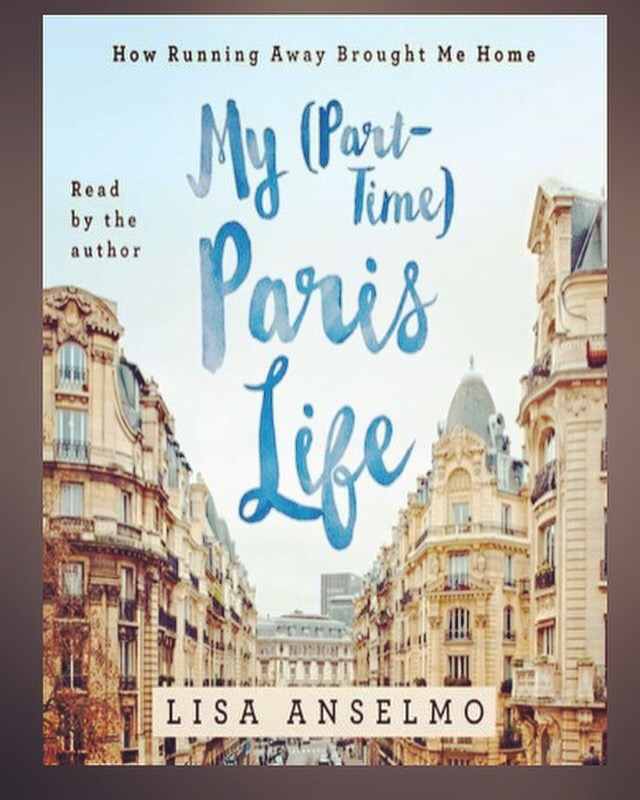
Lisa Anselmo has, on paper, the life I aspire to: writer, living part of her life in her own Paris apartment. My (Part-Time) Paris Life is both Travelogue and memoir. Anselmo mourns the death of her mother, a loss felt most deeply as she explains she was extremely close to her mother. Through the book, Anselmo’s neuroses are laid bare – her anxieties, her attachment to the past, her desire to always remain in control, her struggle with living in France with only passable conversational French. In time, she learns more of the language, makes friends and immerses herself in Paris.
I usually enjoy books where I feel i can relate to the protagonist, or in a memoir, with the author. In the case of Paris life, I felt too connected to Anselmo’s neurotic tendencies – there sections of the book which written as though the inner dialogue in her head, questioning her choices, second guessing herself and fearful of any change or deviation from her plans. That voice is in my head, too, making it challenging to simply enjoy the book, as i found myself empathizing to this point of frustration. It’s a little scary to read your own inner dialogue in another person.
A reader who enjoys travel memoirs would enjoy this book, however, it is at times less a love story to Paris and more a brunch with your neurotic girlfriend, wherein she explains how her life has gone abs what has landed her doing what may or may not be making her happy. 256 pages
I feel that this is an extremely valid point. If there is anything I have learned from becoming more public all you vocal about my opinions it’s that the most common argument for why something I feel is wrong is in fact correct, it’s that it’s always been that way, or “everybody” thinks this way, so it must be right.
I disagree. If “everybody” was really “everybody”, wouldn’t I think that way too? And if the argument is that it’s the way it has always been and everybody does it, we would still have slaves, the Japanese-Canadians would still be interred at the PNE, the world would not have @georgehtakei, I would not have permission to write this post, unless my husband concurred…
I cannot agree strongly enough with @kameronhurley – internalizing a story does not make it true. A story is always just that – a story.
Anne Shirley as portrayed by @amybethmcnulty on @cbc Anne.
I adore Anne Shirley, and this version of Anne-girl is exquisite.
“People laugh at me because I use big words. But if you have big ideas, you have to use big words to express them, haven’t you?” – Anne Shirley ( Anne of Green Gables – LM Montgomery 1908)
Kameron Hurley asks readers to say the first thing that comes to mind upon reading the word “Hero”. What is your first thought?.
.
.
.
.
My first thought was Harry Potter. Then Sherlock Holmes (The Benedict Cumberbatch version, naturally).
Then the Tenth Doctor (11 is my Doctor, but apparently, subconsciously, I feel like Ten is more likely to rescue me…)
These may not be archetypical heroes, but isn’t it a bit sad that my first three thoughts are all white men? Where are my heroines? Where is my mental diversity? It looks like I have some re-training my brain to do.
#kameronhurley @kameronhurley #thegeekfeministrevolution #whatmakesahero #heroarchetype #harrypotter #sherlock #sherlockholmes #benedictcumberbatch #tenthdoctor #whovian #elevenismydoctor #geekgirl #geekstagram #geek #booksbooksandmorebooks #bibliophile #readersofinstagram #read #reader #reading #bibliophile #books #bookclub #booknerd #nerdygirls #nerdygirl #nerd #bookstagram #bookstagrammer #kalidesautelsreads
Processing…
Success! You're on the list.
Whoops! There was an error and we couldn't process your subscription. Please reload the page and try again.
I am excited to start How Emotions Are Made: The Secret Life of The Brain by Lisa Feldman Barrett. My daughter asked for a book review on this one. She’d really like to know where her emotions come from. #howemotionsaremade #thesecretlifeofthebrain #lisafeldmanbarrett #science #sciencebook #STEM #stemgirls #booknerd #read #reader #reading #books #bookclub #bookstagram #bookstagrammer #library #readersofinstagram #bibliophile #booksbooksandmorebooks #kalidesautelsreads
Processing…
Success! You're on the list.
Whoops! There was an error and we couldn't process your subscription. Please reload the page and try again.
I picked up The Geek Feminist Revolution at the library this week. 16 pages in and I can tell @kameronhurley and I will have a lot in common.#geekfeministrevolution #kameronhurley #geekgirl #feminism #feminist #feministlit #feministliterature #geek #geekstagram #nerdygirl #nerd #nerdygirls #bookstagram #readersofinstagram #book #books #bookclub #booknerd #kalidesautelsreads
Processing…
Success! You're on the list.
Whoops! There was an error and we couldn't process your subscription. Please reload the page and try again.
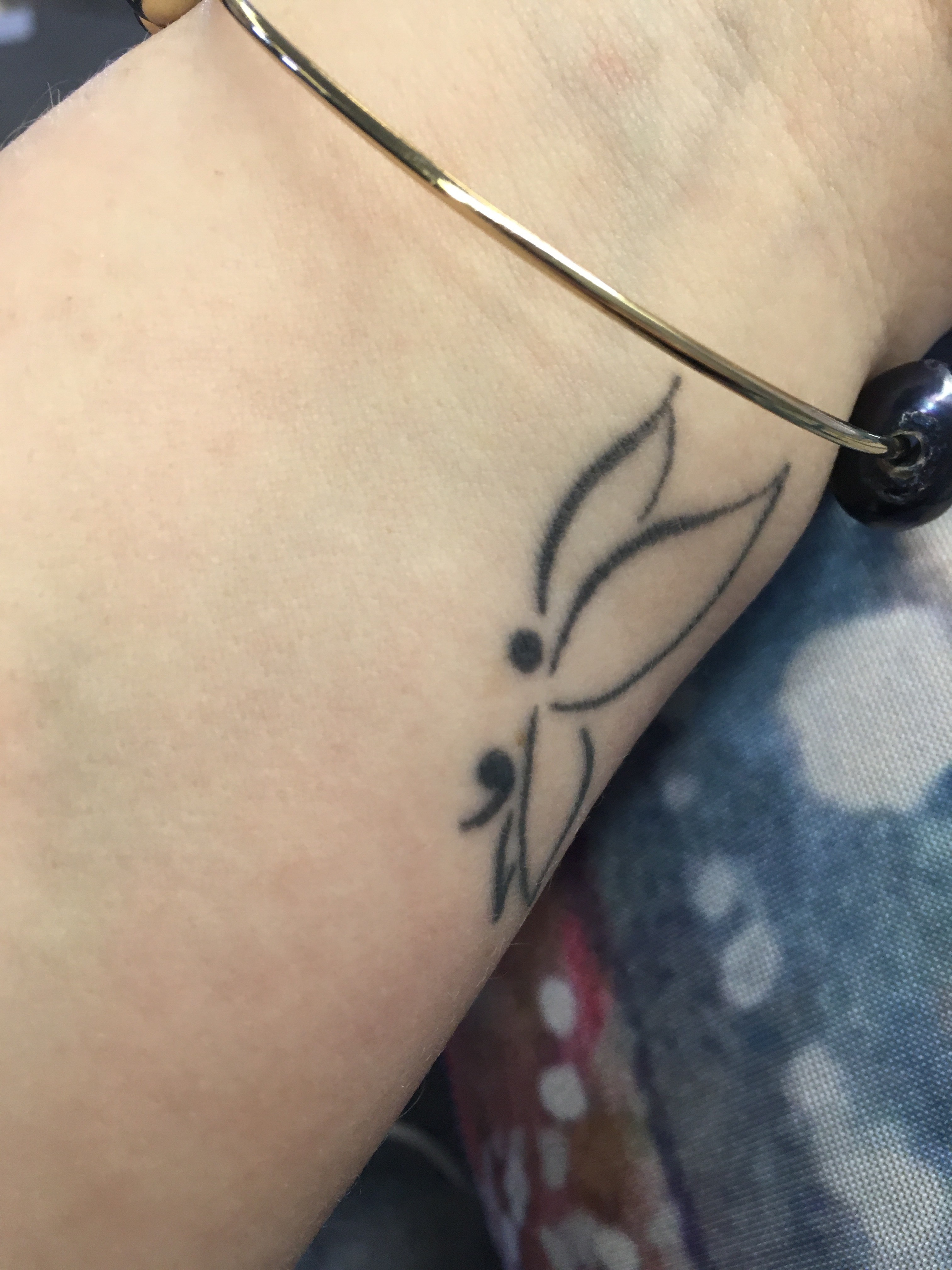
I have always hated tattoos. I have a fear of needles that is ironic for a person who has spent more than half of her life being poked. When I was married, I forced my sister to cover her tattoos with a bracelet and bridesmaids dress, because “I hated tattoos” (bridezilla much??). So what, you may wonder am I doing with a butterfly semicolon tattoo on the inside of my left wrist? Why would someone who never, ever, ever, EVER wanted a tattoo spend perfectly good money on something like that?
Because I got sick. Again. At 7, I had a still-undiagnosed bout of fainting spells that had me in and out of specialists offices, therapists, and even the hair salon, without ever finding out what caused them. At 13, I was diagnosed with Hashimoto’s – it wasn’t very well understood at the time, and the doctor couldn’t even tell me how I had “contracted” it. I spent what felt like months, and months, and months of my life sick and undergoing tests. At 16, I had another long bout of illness that remained unexplained. My thyroid seemed fine, but I as simply sick. There was talk that maybe it was chronic fatigue syndrome, or maybe I was just a lazy teenager who didn’t want to go to school. I stayed home and worked with a tutor, falling asleep over my textbooks and struggling to pass. At 21, I was depressed, and told that talk therapy would help. At 25, I suffered undiagnosed postpartum depression. At 27, my thyroid plummeted through my second pregnancy. At 29, I was miserable because my beloved grandfather was dying, and began over exercising and underrating in an effort to control my body – the one thing I could control. I was seeing specialists because food literally caused me pain. My gallbladder was removed. I had a colonoscopy. I was diagnosed with IBS with severe food in tolerances. At 32, my body gave up on me. I was in pain, I was depressed, I couldn’t get out of bed. My thyroid levels swooped and plummeted. I thought I would die. I couldn’t move, I couldn’t care for my babies. I began to wonder if they wouldn’t be better off if I just went away. I felt terribly lonely. I felt sick. I felt irritable. I felt angry. I felt scared. I spent so much time in the bath that I think the kids thought that I may have been part fish. My family rescued my kids and took care of them while I went to appointments, blood tests, slept, cried.
During this last event, I remember clearly, sitting in my bathtub, looking at my wrists and thinking that if I could ever make it out of this alive, this would have been the hardest thing I had ever done, and I would need to permanently remind myself that I had done it before and could do it again. I knew it needed to be the one thing I swore I would never have, because given my history, there was a very good chance that eventually, I would find myself back to the point where getting dressed was a struggle and I needed my reminder to be in my skin, as much as my freckles and my moles are in my skin. I decided that I would need a tattoo.
When I was finally diagnosed with fibromyalgia, and began my regimen of cymbalta, I felt so happy, so healthy, so well, so elated. It was the most amazing I could remember feeling for more than half of my life. I told my sister (the one whom I had forced to cover up her tattoos… Because mea culpa, and she knew good tattoos) that I needed a tattoo, and she was surprised. She asked me to really think about it. To make sure it was what I wanted. She knows me too well to think that I would never regret doing something I had always dug my heels in about. When it was clear that I really, really wanted a tattoo, she found me an amazing tattoo artist. I had my husband draw a butterfly on my wrist. Renewal, rebirth, and not coincidentally, the universal symbol for Thyroid Disease. I wanted a butterfly.
Then, while I was still working to decide how big I wanted my butterfly, if I wanted it in color, etc., and was thoroughly enjoying my newfound health and mental wellbeing, Amy Bleuel’s Semicolon Project went viral on my social media. I am not one to do things because everyone else is, I wear leggings covered in the face of Benedict Cumberbatch; I stopped wearing my yellow fisher man’s rain slicker when they came into popularity; I fumed when friends would go out and buy a piece of clothing that I owned. Being weird and unique is a big part of my personal identity, so it was not the trend of the Semicolon Project that spoke to me, it was Amy Bleuel’s reason for creating it in the first place. It showed that a person could go through something terrible and make it a pause in her life, rather than a period, and the end of her life. A reminder that things can get better. Pause. Breathe. Keep going.
Now my butterfly needed a semicolon. I asked my husband to design it. I brought it to the artist, who put her own elegant touch on it, and my sister and dear friend took me for my tattoo. They both were tattooed first, in solidarity. I will always, always, always love them for that.
I am writing this today because Amy Bleuel came to the end of her sentence. At 31 years old, a woman who inspired so many of us that suffer mental illness, could no longer see that things would get better. She left the Earth on March 23, by suicide. It is with tears for a woman that I never knew that I share my Semicolon Story. And hopefully, by sharing our stories, Amy Bleuel’s legacy will continue, and our stories will continue; after the pause.
Margaret Atwood wrote the dystopic The Handmaid’s Tale in the 1980s, after the first and second waves of the Women’s Movement. At that time, Conservatives were railing against Affirmative Action, against women working outside the home, against what was considered the “traditional family”. The Handmaid’s Tale is a social satire, wherein women are stripped of their rights, including the right to read. Radiation has left the Republic of Gilead (formerly the United States of America) with a negative population growth and very few fertile women, moving from a present day democratic state to a patriarchal theocracy. Told from the perspective of Offred, the narrative has holes, lapses, memories and imaginings, much as if the reader were interviewing a Handmaid of Gilead. I cannot recommend this book highly enough. 388 pages
 ❤️❤️💔
❤️❤️💔



 Kali J Desautels